

Electrical & Fire Compliance for Bristol Businesses: Insurance, Council Rules & Your Checklist
A practical guide for business owners, commercial landlords and managing agents in Bristol and South Gloucestershire.
Guidance checked: 26 October 2026. Applies to commercial premises in England.
If your insurer, landlord or a fire safety officer asked for your electrical and fire safety records tomorrow, would you know where to find them? More importantly, would those records show that identified problems had been dealt with?
For a shop, café, pub, office, nursery or warehouse, compliance helps protect the people who use the building and reduces the chance of avoidable disruption. A faulty circuit can interrupt trading; a failed alarm or emergency light can undermine the arrangements people rely on to escape safely.
Start with three checks: your legal safety duties, the conditions in your insurance policy, and any requirements attached to your premises licence or lease. They overlap, but one document does not answer all three.
What does commercial electrical and fire compliance involve?
It means managing the building’s electrical and fire risks throughout its use: inspecting and maintaining equipment, addressing faults, reviewing changes and keeping useful evidence. An inspection report is part of that process; the actions taken afterwards matter too.
| Area to check | What you need to establish |
|---|---|
| Fixed electrical installation | Its condition, inspection scope, outstanding defects and next inspection date. |
| Electrical appliances | A maintenance programme suited to the equipment and how it is used. |
| Fire precautions | A recorded fire risk assessment, appropriate measures and ongoing maintenance. |
| Insurance and licensing | The actual conditions applying to your premises, including deadlines and evidence. |
Who is responsible: the business, landlord or managing agent?
Responsibility depends on your role and control of the premises. For fire safety, an employer, owner, landlord, occupier or managing agent may be a responsible person. Where responsibilities are shared, those involved must cooperate and coordinate their arrangements.
For example, a tenant may manage its own shop while the landlord manages a shared staircase and building-wide alarm. Establish who arranges inspections, receives reports and authorises repairs. A lease can allocate tasks, but do not assume it removes your statutory duties.
Source: GOV.UK: fire safety responsibilities and shared premises.
Electrical safety: why a commercial EICR matters
The Electricity at Work Regulations 1989 require electrical systems to be maintained, where necessary, to prevent danger so far as reasonably practicable. HSE explains that inspection and, where necessary, testing are essential parts of preventive maintenance. Records help demonstrate what has been checked and how the installation is being managed.
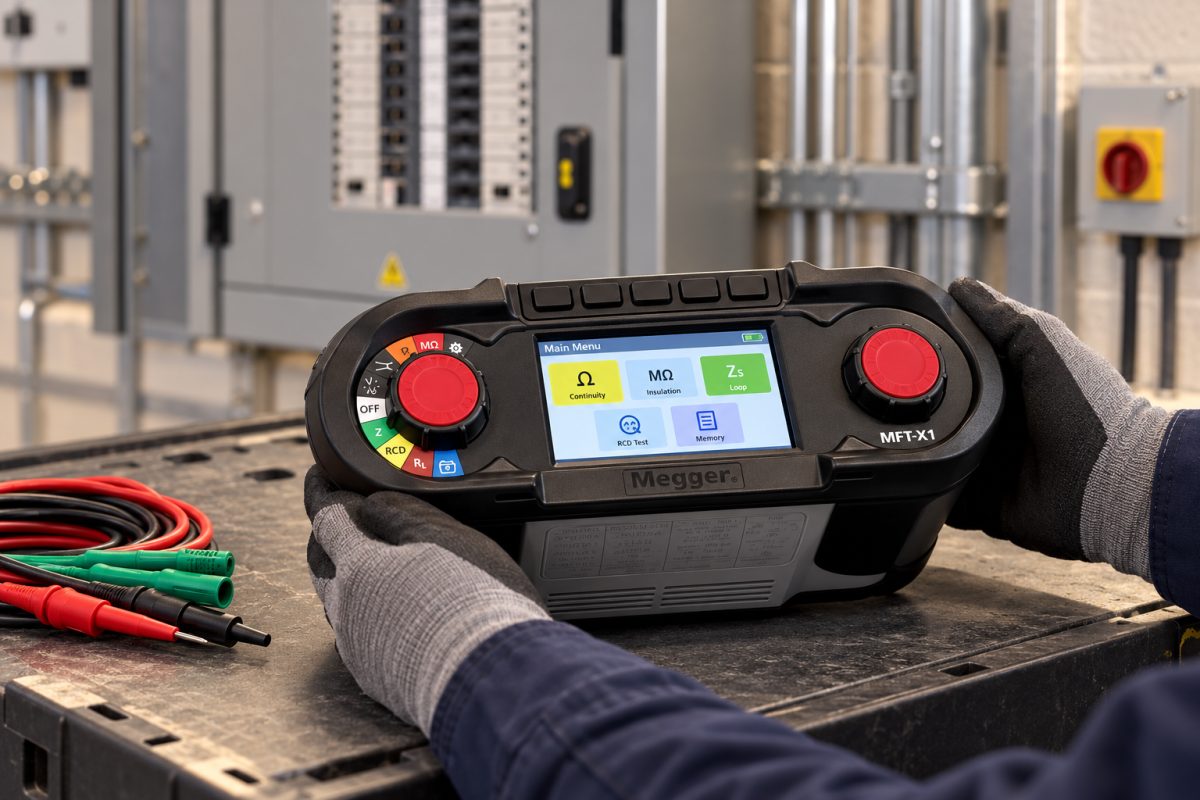
A commercial EICR in Bristol assesses the fixed electrical installation within an agreed scope. This includes relevant wiring, distribution boards, circuits and protective measures. The report records the findings, limitations and recommendations; it is not a guarantee that future faults cannot occur.
Does every commercial property legally need an EICR every five years?
The Electricity at Work Regulations do not set one universal five-year interval. Aviva’s inspection guidance gives five years for offices and shops and three years for industrial installations as examples of recommended intervals. The appropriate interval depends on the installation, use, condition, maintenance and previous findings. A change of occupancy is also a reason to review inspection arrangements.
Check the recommendation on your report and any shorter insurance or licensing requirement. An unsatisfactory report should lead to a clear plan for investigation and remedial work, with urgent dangers addressed promptly. Filing the report alone does not resolve the defects.
Sources: HSE: Electricity at Work Regulations guidance, regulation 4; Aviva: electrical inspection and testing guidance.
Is annual PAT testing compulsory for every business?
HSE confirms that the law does not require every appliance to be PAT tested annually. The duty is to maintain equipment safely. Appropriate user checks, visual inspections and testing depend on the appliance, its environment and how it is used.
A frequently moved cleaner or kitchen appliance may need a different programme from office equipment that stays in one place. Check any separate insurer, landlord or contractual conditions too. Appliance checks and a fixed-installation EICR cover different things.
Source: HSE: portable appliance testing FAQs.
Fire compliance starts with a recorded risk assessment
Under the Regulatory Reform (Fire Safety) Order 2005, as amended, the responsible person must assess fire risks and maintain appropriate precautions. Your assessment should address the actual building, activities and people using it, including anyone who may need help evacuating.
All responsible persons must now record their fire risk assessment in full and record their fire safety arrangements. The old assumption that a very small business does not need a written assessment is out of date. Keep it under review, particularly when layouts, occupancy or activities change.
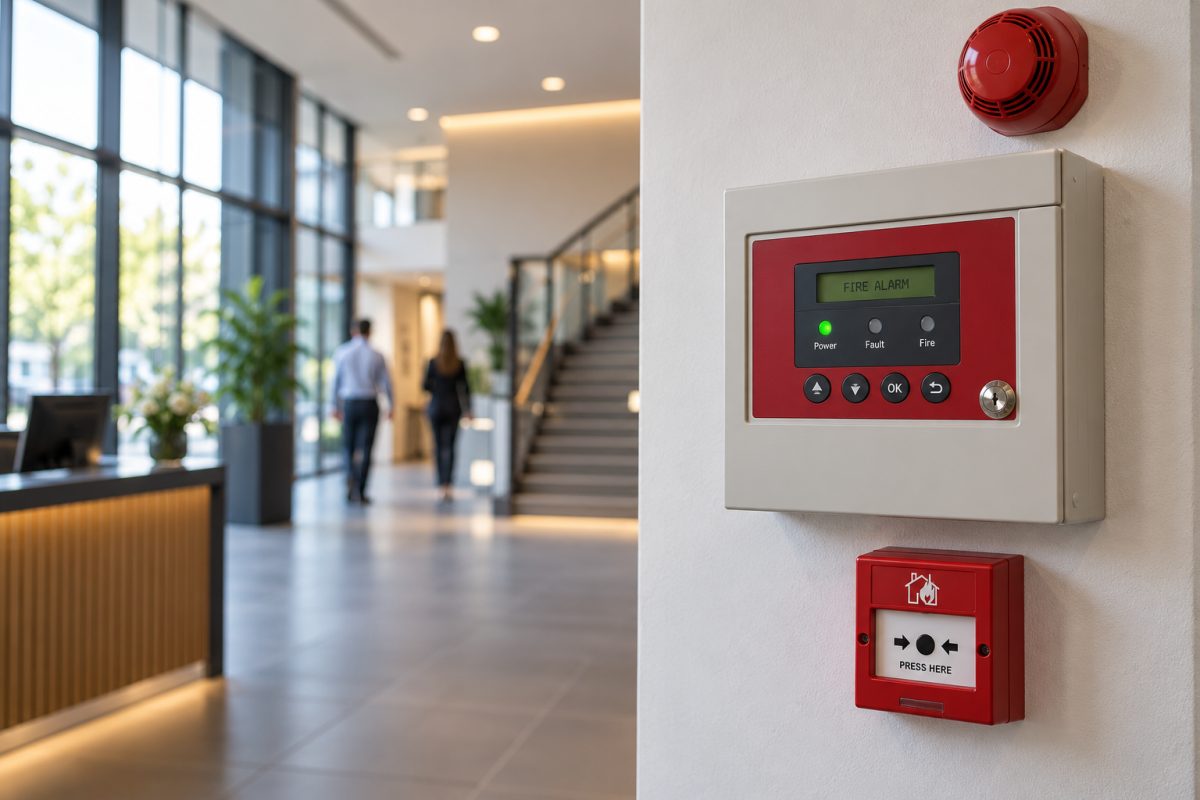
Fire safety also involves escape routes, doors, staff instruction, evacuation arrangements and suitable firefighting equipment. Electrical testing, alarm servicing and emergency lighting checks support this work; they do not replace a suitable fire risk assessment. Obtain competent help where you lack the necessary expertise.
Sources: GOV.UK: fire risk assessments; Home Office: recording duties under Section 156.
Fire alarms and emergency lighting: what should be checked?
Government guidance for offices and shops describes the following typical maintenance pattern. Confirm the programme for your particular system with a competent contractor, taking account of its instructions, the fire risk assessment and any additional conditions.
- Fire alarms: weekly user testing, with inspection and maintenance by a competent person at six-monthly intervals.
- Emergency lighting: monthly function checks and an annual full-duration test, with appropriate maintenance.
- After a fault: record it, arrange corrective action and manage any resulting risk while the system is impaired.
A routine alarm test does not replace professional servicing. Likewise, a light coming on briefly does not establish that its battery can operate for the required duration. Plan emergency lighting discharge tests around safe occupation and battery recharge.
Our emergency lighting installation and testing service in Bristol covers agreed inspections, testing and remedial work.
Source: GOV.UK: fire safety guidance for offices and shops.
What can your business insurer require?
Check the policy wording, schedule and endorsements together. Some policies contain specific requirements for electrical inspections, remedial work, alarm maintenance and records. These are contractual conditions, separate from general safety law.
For a concrete example, a published Hiscox Professional Insurance Portfolio wording, dated October 2022, includes an electrical inspection condition in its property section. It requires inspection at least every five years, defects addressed in accordance with the report, and inspection and remedial records retained for at least five years. Its protections clause also addresses alarm operation and servicing.
This is an example of policy wording, not a rule for every business or every Hiscox policy. That wording also qualifies the consequences of non-compliance by whether it could have increased the risk of the damage in the circumstances. An overdue test does not automatically invalidate every insurance policy.
Example source: Hiscox published wording: electrical installation and protections conditions, PDF page 86.
Ask your broker or insurer to confirm in writing:
- Which inspections and servicing your policy requires, and at what intervals.
- Any contractor qualifications or registration conditions.
- Deadlines for remedial work and how completion must be evidenced.
- What to do if an inspection is overdue or a protective system is faulty.
Zurich’s risk guidance also highlights the importance of completing EICR actions and keeping a clear maintenance record. An inspection programme is only useful when its findings are followed through.
Source: Zurich: electrical maintenance and fire risk.
Council and fire service requirements in Bristol and South Gloucestershire
Several authorities can be involved, depending on your business and premises.
Council health and safety enforcement
HSE identifies local authorities as the usual health and safety contact for premises such as shops, offices, restaurants, pubs and nurseries. HSE oversees other sectors. Check the enforcing authority for your activity and location.
Source: HSE: finding the correct enforcing authority.
Bristol City Council: premises licence conditions
Bristol City Council’s published pool of model licensing conditions includes electrical inspection and record-keeping provisions. For example, condition EL02 addresses inspection of fixed wiring and portable appliances by a competent person at appropriate intervals, with records available for inspection.
The model pool is not a blanket requirement imposed on every Bristol business. Check the conditions actually attached to your premises licence. This is especially relevant when managing a pub, bar, licensed restaurant or entertainment venue. A premises licence also does not override planning or lease restrictions.
Sources: Bristol City Council: pool of licensing conditions; premises licensing guidance.
South Gloucestershire Council: commercial premises and licensing
Businesses in areas such as Hanham, Kingswood, Downend, Filton and Bradley Stoke should check their premises address against the South Gloucestershire Council boundary. A Bristol postal address does not by itself identify the licensing authority. Use the GOV.UK council finder to confirm the correct council.
Workplace safety: South Gloucestershire Council carries out health and safety inspections and investigates complaints in premises within its enforcement remit. Its guidance explains that businesses must identify workplace hazards and adequately control the risks. The national electrical safety duties explained above still apply.
Premises licensing: the council handles licences for activities such as alcohol sales, late-night hot food or drink, and regulated entertainment, subject to the relevant exemptions. Check your operating schedule and the conditions attached to your own licence when confirming safety measures, inspection arrangements and records.
South Gloucestershire’s published licensing policy says conditions should be appropriate and proportionate to the individual premises. It also explains that it does not seek to impose fire safety conditions where the Regulatory Reform (Fire Safety) Order applies. A premises licence does not replace your fire risk assessment or ongoing fire safety duties. Avon Fire & Rescue Service is identified in the policy as the relevant fire authority.
For a local business or commercial landlord, the practical step is to check the actual licence alongside the EICR, fire safety records and insurance documents, then clarify any missing evidence or outstanding work with the appropriate council team, fire safety professional or electrical contractor.
Sources: South Gloucestershire Council’s health and safety at work guidance, premises licence guidance and Statement of Licensing Policy, paragraphs 19, 56 and 58 and Appendix 2.
Avon Fire & Rescue audits
Avon Fire & Rescue Service’s audit guidance specifically lists fire risk assessments, EICRs, alarm and emergency lighting maintenance records, emergency procedures, staff training and drill logs among the documents officers may inspect. Officers also examine precautions such as escape routes and fire doors.
This makes an organised compliance file useful well before an inspection is arranged. Businesses around Bristol may fall under neighbouring councils, so confirm the correct licensing authority for the premises address. Mixed commercial and residential buildings can also have additional housing requirements.
Source: Avon Fire & Rescue Service: fire safety audits.
A practical compliance checklist for your premises
Use this as a starting point for a review with the people responsible for your building:
- Name the owners of each task: business, landlord, managing agent and contractors.
- Find the latest EICR: check its scope, findings and next inspection date.
- Close out defects: retain the appropriate evidence of repairs and further investigation.
- Review appliance maintenance: include equipment introduced since the last review.
- Check the fire risk assessment: make sure it reflects the current premises and its action plan is followed.
- Check alarm and emergency lighting records: identify missed checks, faults and outstanding work.
- Read insurance and licence conditions: confirm requirements rather than relying on assumptions.
- Set reminders: record due dates, responsible people and completion evidence in one place.
If something is missing, establish what is needed and its urgency. Avoid treating a bundle of certificates as proof that every risk has been addressed.
Frequently asked questions
Does a satisfactory EICR cover all fire safety requirements?
No. It reports on the fixed electrical installation within its scope. Fire risk assessment, alarm maintenance, emergency lighting, escape arrangements and staff training remain separate considerations.
Can I rely on my landlord’s records?
Request copies and check which areas and systems they cover. Agree who handles your unit, shared areas and outstanding actions. Your own duties depend on your role and control of the premises.
Should I wait for insurance renewal to check compliance?
No. Find out what your existing policy requires now. If records are missing or an inspection is overdue, speak to your broker and the appropriate contractor about the next steps.
Need help with electrical compliance in Bristol or South Gloucestershire?
Kebbi Electrical Services provides commercial electrical services across Bristol and South Gloucestershire, including EICRs, fault finding, remedial repairs and emergency lighting work. Share your premises type, postcode, available reports and any insurer or licensing request so we can discuss the electrical work you need.
For an inspection, we agree access, scope and planned power interruptions around the business. Our commercial EICR preparation checklist explains what to have ready. For fire alarm enquiries, tell us the system type and required work so we can confirm the appropriate scope.
Not sure where to start? Send your latest report or the wording of the request you have received. We can discuss the electrical inspection or remedial work it calls for; your insurer or broker should confirm insurance cover and policy interpretation.
This guide provides general information for commercial premises in England. Requirements depend on the premises, activities and documents that apply to your business. It does not replace a site-specific assessment or advice on your insurance or legal position.
